thecouponsfeed

Category: Uncategorized

Amazon Pan-EU Fees: Protect Final Price with Smart Coupon Application

Written on September 10, 2025 in Uncategorized

Amazon’s Pan-EU program stores inventory across European fulfillment centres and charges local fulfilment and referral fees per country. Sellers pay these fees on top of any coupon discount they offer. Amazon Seller CentralAmazon Seller Central In 2025 Amazon updated its EU fee cards and introduced Pan-EU rate changes, oversize surcharges, and a low-inventory cost coverage fee for units with low historical days of supply. These changes change net margin when sellers run coupons. Amazon MediaAmazon Seller Central Compute coupon impact like this: take the advertised price, subtract the coupon, then subtract the referral fee percentage and the country fulfilment fee. Add any Pan-EU low-inventory or oversize surcharges. The remaining number equals seller net before VAT and returns. Use Amazon’s FBA Rate Card and Fee Preview tools to get exact per-unit numbers. Amazon MediaAmazon Seller Central Five seller actions to protect final price:

Continue reading

€2 Low-Value Parcel Fee: How It Changes Coupon ROI for Chinese Marketplaces

Written on September 10, 2025 in Uncategorized

The EU proposes a €2 handling fee on low-value parcels sent to consumers from outside the bloc. The proposal targets huge volumes of small packages from China and awaits final approval by EU institutions. European ParliamentReuters The fee charges sellers or importers, not customs lines to consumers in the draft. The proposal also offers a reduced €0.50 rate for consignments that pass through certified importer schemes or EU warehouses. That difference changes the math for coupon promotions. Financial Timesvatcalc.com Concrete impact examples (simple math):• €5 item with 20% coupon: buyer pays €4. Seller net after coupon = €4. Seller pays €2 fee -> net = €2. If seller passes fee to buyer, buyer pays €6.• €20 item with 25% coupon: buyer pays €15. Seller net after coupon = €15. Seller pays €2 fee -> net = €13. If passed to buyer, buyer pays €17.• €50 item with 10% coupon: buyer pays €45. Seller net after coupon = €45. Seller pays €2 fee -> net = €43. If passed to buyer, buyer pays €47.These examples show the fee can wipe out coupon value on very low-ticket items and cut seller margin on mid-ticket items. (Data from EU proposal and reporting.) ReutersFinancial Times Seller tactics to protect coupon ROI:

Continue reading

Amazon France: Coupon Strategies for New Sellers on Amazon.fr

Written on September 10, 2025 in Uncategorized

New sellers on Amazon.fr win attention fast when they use coupons right. Start with the basics: create coupons from Seller Central under Advertising → Coupons and follow Amazon’s setup flow for budget, duration, and eligibility. Seller Central FR Strategy 1 — Launch with Today’s Deals. Combine a short coupon window with a Today’s Deal to drive visibility and reviews. Use a clear budget and track conversion during the promo day. Amazon Seller Services FR Strategy 2 — Meet coupon eligibility rules first. Amazon requires products to meet sales-history and pricing rules before a coupon will run. Set discounts between allowed minimum and maximum rates to avoid rejection. Test on one SKU before scaling. Amazon Seller CentralSeller Central FR Strategy 3 — Protect margin with fee and VAT checks. Calculate referral, FBA, and new 2025 fee previews before you set coupon depth. Add VAT and IOSS logic for cross-border shipments so the displayed discount reflects the final price for French buyers. Use Amazon fee preview tools and the VAT guide for accuracy. Seller Central FRAmazon Seller Services FR Strategy 4 — Localize copy and images. Translate title, bullets, and A+ content to French. Highlight free returns, warranty, and fast shipping to reduce hesitation. Amazon’s localized listing tools help maintain consistency across EU stores. Amazon Seller Services FR Strategy 5 — Monitor and iterate. Run a 7–14 day coupon test. Track conversion, ACoS, and return rates. Pull the coupon if return or fraud rates rise. Keep proof of performance and customer-service logs for disputes.

Continue reading

Temu in France: Where to Find Seller-Level Promo Codes That Actually Work

Written on September 10, 2025 in Uncategorized

Temu grew fast in France and across the EU. Sellers now run platform and seller-level promos to win local shoppers. Modern Retail Start by checking Temu’s official coupon hub. Temu lists app and site promotions there. Use that page to confirm sitewide bundles before hunting seller codes. temu Look for seller-level codes in five places. First, open the seller storefront on Temu. Sellers place limited coupons on their storefront banners. Second, check the product page. Small coupon buttons often sit under the price. Third, inspect the app notifications and daily deals widget. App-only promos appear there. Fourth, follow seller social channels and newsletters. Sellers publish exclusive codes to followers. Fifth, check affiliate links from trusted publishers. Some creators share valid seller codes. Verify every code before checkout. Confirm the coupon reduces the final price in the cart. Check shipping, VAT, and duty lines to avoid surprise costs. France enforces a 14-day withdrawal right for distance sales. Keep proof of purchase to use that right if a seller misrepresents an item. SignalConso Beware platform risks. The EU has flagged systemic risks on some large marketplaces. Inspect seller ratings, product compliance notes, and safety reports before you buy. If an item looks unsafe or counterfeit, use Temu’s report flow and save screenshots. The Verge Quick checklist for French shoppers:

Continue reading

Half of Europe’s shoppers are incognito

Written on September 5, 2025 in Uncategorized

Half of European consumers shop in secret. The main reasons for stealth shopping are embarrassment and a wish to avoid arguments at home. Six out of ten secret shoppers hide their purchases from a romantic partner. Parents are the second most common group left in the dark, especially in Italy where many young adults live with their parents until around age 30. In other EU countries the average leaving age is 26, in Germany even 24.

Continue reading

The Rise of Direct-to-Consumer (DTC) Brands: How Companies Are Shaping the Future of E-Commerce

Written on September 4, 2025 in Uncategorized

Introduction:Direct-to-consumer (DTC) brands have experienced exponential growth in recent years, fundamentally shifting the e-commerce landscape. By bypassing traditional retail channels, DTC brands can offer consumers a more personalized shopping experience, often at lower prices. This model not only gives brands greater control over their marketing, customer data, and product pricing but also allows them to build direct relationships with their customers. In this article, we will explore how DTC brands are shaping the future of e-commerce and the key strategies that other companies can adopt to succeed in the DTC space. What is the DTC Model?The Direct-to-Consumer (DTC) model involves brands selling products directly to customers through their own online platforms, rather than relying on third-party retailers or distributors. This model has been gaining popularity across industries, from fashion and beauty to health and home goods. By cutting out the middleman, DTC brands are able to offer better prices, more transparency, and enhanced customer service. Major DTC brands like Warby Parker, Glossier, and Casper have demonstrated the success and potential of this business model. The Role of Digital Marketing in DTC Success:One of the key reasons DTC brands have thrived is their ability to leverage digital marketing. These brands are highly effective at using data-driven marketing strategies to attract and engage customers. Social media platforms like Instagram, Facebook, and TikTok have become critical tools for DTC brands to build brand awareness and reach targeted consumer segments. Through highly engaging content, influencer partnerships, and paid ads, DTC brands can create a direct connection with their audience in ways that traditional retailers cannot. For other companies looking to enter the DTC space, it’s essential to have a strong digital marketing strategy. Investing in social media ads, content creation, search engine optimization (SEO), and email marketing can help create a loyal customer base. Additionally, using data analytics to understand consumer behavior and preferences is vital for improving marketing efforts and driving conversions. Personalized Customer Experience:One of the hallmarks of DTC brands is their ability to offer personalized experiences that traditional retail often lacks. By owning the entire customer journey, from browsing to purchase and beyond, DTC brands can tailor their communications, offers, and products to individual preferences. For example, brands like Glossier use customer feedback to improve their products and marketing, ensuring that their customers feel heard and valued. For other companies looking to adopt the DTC model, personalization should be at the heart of their strategy. This can include personalized email campaigns, customized product recommendations, and loyalty programs that reward customers for repeat purchases. Using customer data to improve the shopping experience can lead to higher customer satisfaction, increased sales, and stronger brand loyalty. The Power of Subscription Models in DTC:Subscription services have become increasingly popular among DTC brands, providing a steady stream of revenue while offering customers added convenience. Brands like Dollar Shave Club, HelloFresh, and Sips by have built their business models around subscription-based offerings, allowing customers to receive regular deliveries of products they love. Implementing a subscription model can provide significant benefits for businesses. In addition to creating recurring revenue, subscription models build customer loyalty and increase the lifetime value of each customer. For e-commerce companies considering a subscription model, it’s essential to offer something of consistent value, whether it’s convenience, exclusive products, or discounts. The Role of Data in Building Stronger Customer Relationships:One of the key advantages of the DTC model is that brands have full access to customer data. This allows them to track customer preferences, purchasing behavior, and even customer service interactions. With this data, DTC brands can build stronger, more personalized relationships with their customers, ensuring that their products and services meet their needs. For companies looking to transition to DTC, leveraging customer data is crucial. Businesses should invest in customer relationship management (CRM) systems that allow them to collect, store, and analyze data. Using this data to understand customer behavior and personalize marketing efforts can help businesses provide better service, tailor their offerings, and enhance the overall customer experience. Sustainability and Ethical Practices in DTC:Sustainability has become an increasingly important factor for DTC consumers, who are often more conscious of the environmental impact of the products they buy. Many successful DTC brands have embraced sustainability by using eco-friendly packaging, sourcing materials responsibly, and creating products that are both high-quality and environmentally conscious. For businesses entering the DTC space, sustainability is a key consideration. Companies can differentiate themselves by adopting ethical practices such as reducing waste, using recyclable packaging, and supporting fair trade. Brands that commit to sustainability not only attract eco-conscious customers but also build brand loyalty by showing they care about the planet. Evolving Customer Service in DTC:Customer service is another area where DTC brands shine. By maintaining control over the entire customer experience, DTC brands can provide more responsive, personalized, and accessible customer service. Whether through live chat, social media, or email support, DTC companies prioritize customer satisfaction and make it easy for customers to reach out for assistance. For other businesses, investing in exceptional customer service can be a game-changer. Providing multiple customer support channels, responding quickly to inquiries, and resolving issues promptly can lead to higher customer satisfaction and positive word-of-mouth. The Challenges of the DTC Model:While the DTC model offers many benefits, it’s not without its challenges. One of the biggest hurdles is the cost of customer acquisition, as DTC brands must spend heavily on marketing to attract and retain customers. Additionally, the pressure to constantly innovate and provide unique products can be overwhelming for new entrants. For businesses considering a DTC model, it’s important to carefully plan marketing efforts, ensuring that the customer acquisition cost is sustainable. Furthermore, companies should strive for differentiation by offering high-quality, unique products that stand out from the competition. Conclusion:The rise of Direct-to-Consumer (DTC) brands is reshaping the future of e-commerce. These brands have proven that bypassing traditional retail models can offer significant advantages, including better customer relationships, more control over branding, and the ability to offer personalized experiences. By leveraging digital…

Continue reading

How Big-Box Retailers Like Walmart and Target Are Competing with E-Commerce Giants

Written on September 4, 2025 in Uncategorized

Introduction:The rise of e-commerce giants like Amazon has posed a significant challenge to traditional brick-and-mortar stores. However, big-box retailers like Walmart and Target are not only surviving the shift to online shopping—they are thriving in the digital age. These companies have taken decisive steps to adapt and compete with e-commerce powerhouses, leveraging their physical stores, supply chain capabilities, and cutting-edge technology. In this article, we’ll explore how Walmart and Target are competing with e-commerce giants and what other retailers can learn from their strategies. Omnichannel Strategies: Blending Online and In-Store Experiences:Walmart and Target have embraced an omnichannel approach to retail, blending their extensive in-store presence with online shopping. Walmart, for example, has seamlessly integrated its website and app with its brick-and-mortar stores, allowing customers to shop online and pick up their orders in-store through its “Buy Online, Pick Up In Store” (BOPIS) service. Target has adopted a similar strategy with its same-day delivery service, Target Drive Up, which allows customers to order online and pick up their purchases from their cars. For other retailers, adopting an omnichannel strategy is key to competing with e-commerce giants. By combining the convenience of online shopping with the immediacy of in-store shopping, businesses can offer customers a seamless experience, giving them the flexibility to choose how they shop. Expanding Delivery and Logistics Capabilities:Walmart and Target have invested heavily in logistics and delivery systems to rival the speed and convenience of Amazon’s delivery services. Walmart, for instance, has built a robust delivery infrastructure, expanding its same-day and next-day delivery options for a wide range of products. Target has also ramped up its delivery capabilities, partnering with third-party services like Shipt for fast, same-day delivery. This focus on efficient delivery has been critical in competing with e-commerce giants. Retailers can take a page from Walmart and Target’s playbook by optimizing their delivery networks and offering faster, more reliable delivery services. Partnering with third-party services or leveraging technology like autonomous vehicles and drones can also improve delivery times and reduce costs. Leveraging Data for Personalization:Data is a crucial asset for e-commerce companies, and both Walmart and Target are using customer data to personalize their offerings. Target, for example, uses advanced data analytics to predict customer preferences and create personalized shopping experiences. The company’s Target Circle loyalty program offers members tailored deals based on their past shopping habits, making customers feel valued and increasing their likelihood of repeat purchases. For other retailers, using data to understand customer behavior and preferences is an effective way to stay competitive. By offering personalized promotions, product recommendations, and discounts based on customer data, businesses can improve customer satisfaction and drive sales. Investing in E-Commerce and Technology:Both Walmart and Target have made significant investments in e-commerce and technology to stay competitive in the digital world. Walmart acquired Jet.com to bolster its online presence, and it continues to invest in improving its website and mobile app experience. Target has also enhanced its digital experience, offering a more intuitive website, faster checkout options, and personalized product recommendations powered by artificial intelligence. Small and mid-sized retailers can learn from Walmart and Target’s tech investments by improving their e-commerce platforms and integrating technologies like AI, machine learning, and automation. A seamless digital experience, from browsing to checkout, is crucial for attracting and retaining customers in today’s competitive market. Price Matching and Competitive Pricing:One area where Walmart and Target excel is in price competitiveness. Both retailers offer price matching programs, ensuring that customers get the best deal available. Walmart, in particular, has made a name for itself with its “Everyday Low Price” strategy, which undercuts competitors’ prices across a wide range of product categories. Target, while not always the lowest price, offers a value proposition with its quality products, loyalty discounts, and exclusive deals. For retailers looking to compete with e-commerce giants, maintaining competitive pricing is crucial. Offering price matching, loyalty discounts, or exclusive deals can help businesses retain customers and differentiate themselves from online-only stores. Additionally, focusing on value—not just price—can be a key strategy for competing with larger players in the market. Focus on Private Label Products and Exclusive Offerings:Both Walmart and Target have expanded their offerings of private-label products, which are exclusive to their stores. Target’s store brands like Good & Gather (food) and Up & Up (household products) allow the company to offer high-quality products at lower prices. Walmart’s private-label brands, such as Great Value and Equate, serve the same purpose, offering customers budget-friendly options without sacrificing quality. For other retailers, private-label products are an excellent way to offer exclusive items that customers can’t find elsewhere. Developing unique, high-quality private-label products can help retailers build brand loyalty and differentiate themselves from competitors, both online and offline. Sustainability and Corporate Responsibility:Sustainability has become a significant focus for many consumers, and both Walmart and Target have made strides in becoming more environmentally conscious. Walmart has set ambitious sustainability goals, including reducing emissions and sourcing more sustainable products. Target has similarly made commitments to sustainable sourcing, reducing waste, and offering more eco-friendly product choices. For other retailers, embracing sustainability can be a key differentiator in a competitive market. By adopting environmentally responsible practices and offering sustainable products, businesses can attract eco-conscious consumers and improve their brand image. Conclusion:Walmart and Target have successfully adapted to the rise of e-commerce giants by embracing a combination of technology, data, logistics, and customer-centric strategies. Their ability to integrate online and in-store experiences, optimize delivery capabilities, personalize customer interactions, and offer competitive pricing has allowed them to maintain their relevance in the digital age. Other retailers can learn valuable lessons from Walmart and Target’s strategies, incorporating similar approaches into their own businesses to stay competitive in the ever-evolving e-commerce landscape.

Continue reading

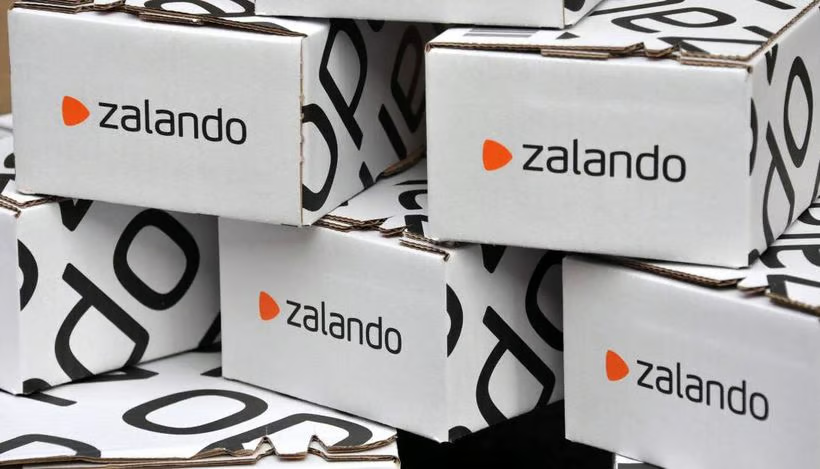
How Zalando Is Leading the Charge in Sustainable E-Commerce: What Other Companies Can Learn

Written on September 4, 2025 in Uncategorized

Introduction:Zalando, a European leader in online fashion retail, has long been at the forefront of e-commerce innovation. But more recently, the company has taken a bold step forward by prioritizing sustainability. As sustainability becomes an increasingly important issue for consumers and businesses alike, Zalando has set an example for the e-commerce industry by implementing eco-friendly practices throughout its operations. In this article, we’ll explore Zalando’s commitment to sustainability and what other companies can learn from their efforts. Sustainable Product Offering:Zalando has made a significant shift towards offering more sustainable fashion choices to its customers. Through its “Do.MORE” initiative, Zalando has committed to making sustainability a core part of its business model. The company offers a wide range of eco-friendly products, including clothing made from organic materials, recycled fabrics, and low-impact dyes. Zalando has even introduced its own sustainable fashion brand, providing consumers with more environmentally-conscious options. E-commerce businesses can learn from Zalando’s example by incorporating more sustainable products into their offerings. Even if a business doesn’t specialize in eco-friendly fashion, there are still opportunities to source products that align with sustainable practices, such as using organic or recycled materials. Offering these products can attract a growing customer base that values sustainability. Sustainable Packaging Solutions:Another area where Zalando has made significant strides is in its packaging. The company has worked to reduce the environmental impact of packaging by introducing recyclable and reusable materials. In addition, Zalando has focused on reducing the amount of packaging used in the first place by optimizing its packaging process. This is a crucial step in reducing waste, especially as the e-commerce industry continues to grow. Other businesses, no matter their size, can take inspiration from Zalando’s packaging efforts. For instance, companies can switch to eco-friendly materials like biodegradable packing peanuts, recyclable cardboard, or even reusable bags. Reducing packaging waste not only helps the environment but can also resonate with eco-conscious customers who appreciate a company’s commitment to sustainability. Carbon Neutrality and Energy Efficiency:Zalando has made significant progress toward carbon neutrality, aiming to reduce its carbon footprint through sustainable logistics and energy-efficient operations. The company has partnered with various organizations to offset its emissions and invested in renewable energy sources to power its warehouses and offices. Zalando’s goal is to achieve net-zero emissions by 2050, with an interim goal of reducing emissions by 80% by 2025. For other e-commerce businesses, achieving carbon neutrality may seem like a daunting task. However, there are steps that even small businesses can take to reduce their carbon footprint. For instance, partnering with carbon-neutral shipping carriers, investing in energy-efficient technologies, and offsetting emissions through tree-planting initiatives are all strategies that businesses can implement. Additionally, ensuring that your company uses renewable energy or switching to more energy-efficient equipment can have a meaningful impact. Sustainability in the Supply Chain:Zalando has taken great care to ensure that sustainability is integrated throughout its supply chain. The company works closely with suppliers who adhere to strict environmental standards and ethical labor practices. Zalando has also implemented transparency in its supply chain, allowing customers to see the environmental impact of the products they’re purchasing. Small and medium-sized e-commerce businesses can take similar steps by choosing suppliers who prioritize sustainability and ethics. Transparency in the supply chain is becoming a key factor for many consumers, and showcasing these efforts can build trust and loyalty with customers who value sustainability. By working with responsible suppliers and communicating these efforts to consumers, businesses can make a positive environmental impact while gaining consumer trust. Circular Economy Initiatives:One of the most exciting sustainability initiatives Zalando has undertaken is its move toward a circular economy model. This includes programs that encourage customers to recycle or resell their old clothing. Zalando’s “Pre-Owned” initiative allows customers to buy and sell secondhand items on the platform, promoting reuse and reducing waste. For other companies, embracing the circular economy can offer significant benefits. Businesses can consider offering buy-back programs, creating product take-back schemes, or supporting resale platforms. These initiatives not only promote sustainability but also engage customers in the process, allowing them to feel like active participants in reducing waste. Collaborations and Advocacy for Industry Change:Zalando has also been an advocate for industry-wide sustainability. The company works with various organizations to promote environmental practices in fashion and retail. Zalando is a member of the “Fashion for Good” initiative, which brings together companies, innovators, and NGOs to accelerate the transition toward sustainable fashion. E-commerce businesses can learn from Zalando’s approach by joining sustainability-focused initiatives and collaborating with like-minded brands. By doing so, companies can not only improve their own sustainability practices but also contribute to industry-wide change. Collaboration helps amplify the impact, and it can also provide valuable insights and resources for small businesses looking to become more sustainable. Conclusion:Zalando’s commitment to sustainability serves as an inspiring model for e-commerce companies worldwide. From offering sustainable products and improving packaging to striving for carbon neutrality and promoting circular economy initiatives, Zalando has set a high standard for how businesses can prioritize sustainability in their operations. Other companies, regardless of size, can take valuable lessons from Zalando’s approach and apply these strategies to create a more sustainable future for e-commerce. In doing so, businesses not only contribute to environmental preservation but also build stronger, more loyal customer bases that care about the planet.

Continue reading